Can WebAR let shoppers see products in their own space with no app install — and meaningfully cut returns?
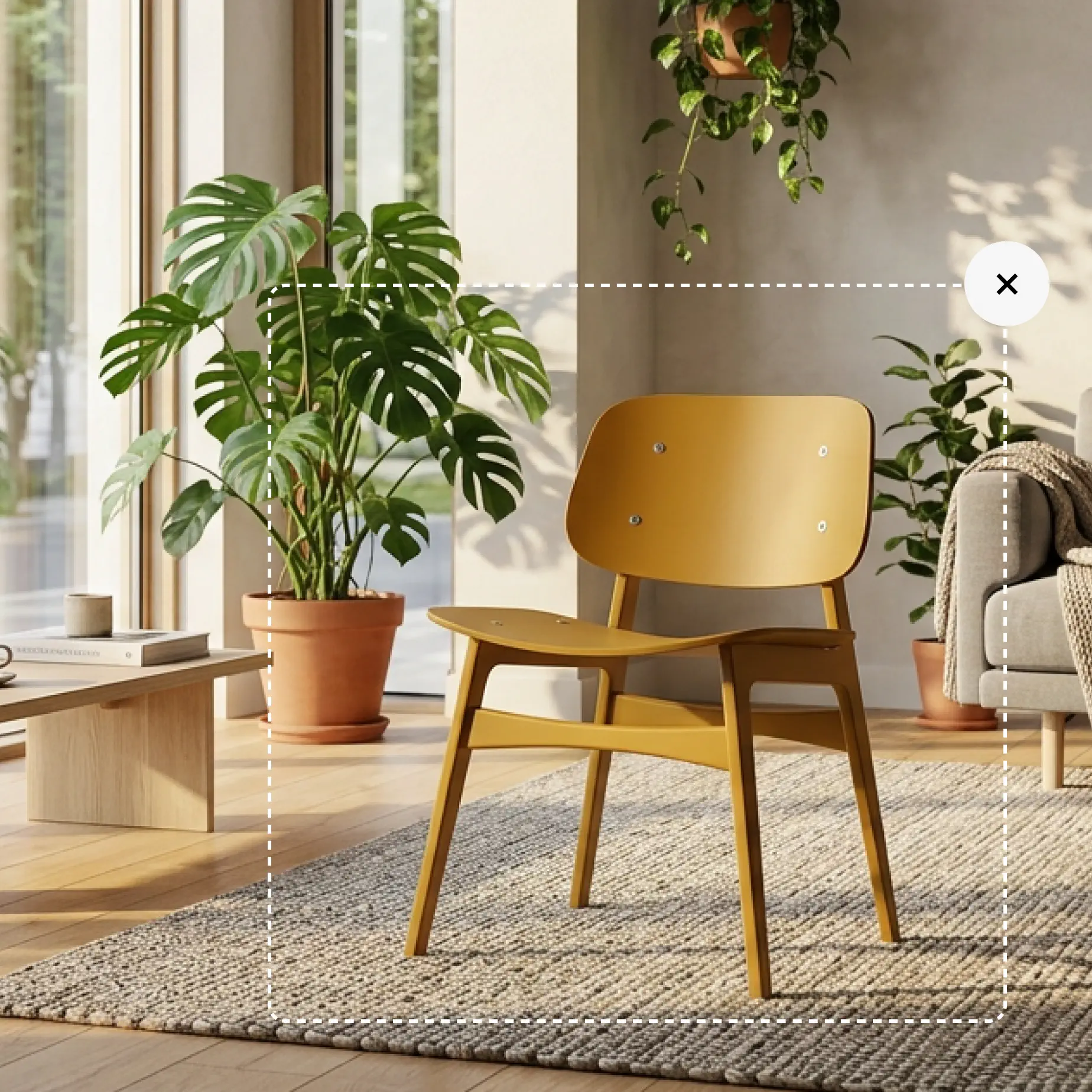



refined.ar helps store owners sell more effectively by rendering 3D product visualizations directly in the customer's space. It works two ways — a browser-based WebAR mode with no install, and a standalone app — and the value proposition is concrete: better buying decisions for customers, fewer returns for sellers.
refined.ar
2021
AR product visualization can help customers buy with more confidence and sellers see fewer returns.
A dual-mode AR sales tool: a WebAR experience that runs in the browser with no install, plus a standalone Unity app for cases that need it. A web admin panel — TypeScript, React, Next.js — lets sellers manage 3D models and generate a shareable link, a QR code, or an embeddable "Show in AR" button for any ecommerce site.
The problem space
Online shoppers can't touch, scale, or place a product before buying — so they over-order and return. Returns are a structural cost of ecommerce, and they hit the planet too: a quarter of returned goods end up in landfill. AR product visualization is the most direct fix — it lets customers see the actual product in their actual room. The frontier question for refined.ar: can that experience be delivered through the browser (WebAR), removing the app-install barrier that throttles AR adoption in retail?
cost of returns to businesses in 2021 (Shopify est.)
more likely customers are to buy a product they can view in their space
returns Macy's achieved after AR/VR product viz — vs. a 5–7% furniture-industry average
Supporting: returns make up 15–40% of online sales, and ~25% of returns end up in landfills (CNBC). All figures cited in sources below.
Technology choices
What we evaluated, what we chose, and why.
The core differentiator. Delivering AR in the browser removes the install barrier that limits retail AR adoption — a shopper taps "Show in AR" on a product page and sees the item in their room, no download. This directly answers the limitation we found in AR Model Showcase.
Kept as a second mode for use cases that need higher fidelity or a tailored experience; users scan a QR to view a model added in the admin panel.
For managing 3D models and generating shareable links, QR codes, and an embeddable web component (a customizable "Show in AR" button) that drops into any ecommerce site.
The native AR layer underneath both modes.
Rejected as the primary path. Requiring an install kills conversion in an ecommerce flow — the explicit lesson carried over from AR Model Showcase.
Rejected. WebAR needs lightweight, optimized models (a few MB); ordinary AutoCAD assets won't perform — so a model-optimization step is part of the solution, not an afterthought.
The POC in action
The working thing — capabilities, not a scope list.
A shopper opens a link or taps an embedded button and sees the product in their space through the browser. On desktop, the model shows in 3D with a QR code to continue in AR on a phone.
The admin panel generates a customizable web component that integrates with any website or ecommerce platform — turning any product page AR-enabled.
Sellers upload and manage 3D models in the panel and can measure user engagement and AR/3D's impact on sales.
The tool also facilitates contact with 3D designers who optimize files for WebAR — addressing the prerequisite of high-quality, lightweight models.
Results & takeaways
Honest feasibility findings — and the resolution of an earlier limitation.
Products render in-space straight from the browser, closing the exact friction point that limited AR Model Showcase — and making AR viable inside a real ecommerce flow.
Higher purchase confidence (11× more likely to buy when viewable in space) and dramatic returns reduction (Macy's to <2%) give the tool a clear, measurable ROI story for sellers.
WebAR renders at lower quality on Android than iOS (both need testing for consistency), and the desktop→phone QR handoff introduces friction that has to be handled smoothly. High-quality, WebAR-optimized 3D models are a hard prerequisite and a real cost.
Seamless one-click integration with Shopify, BigCommerce, and others — plus a streamlined model-optimization pipeline — is what turns this from a capable tool into a scalable product.
